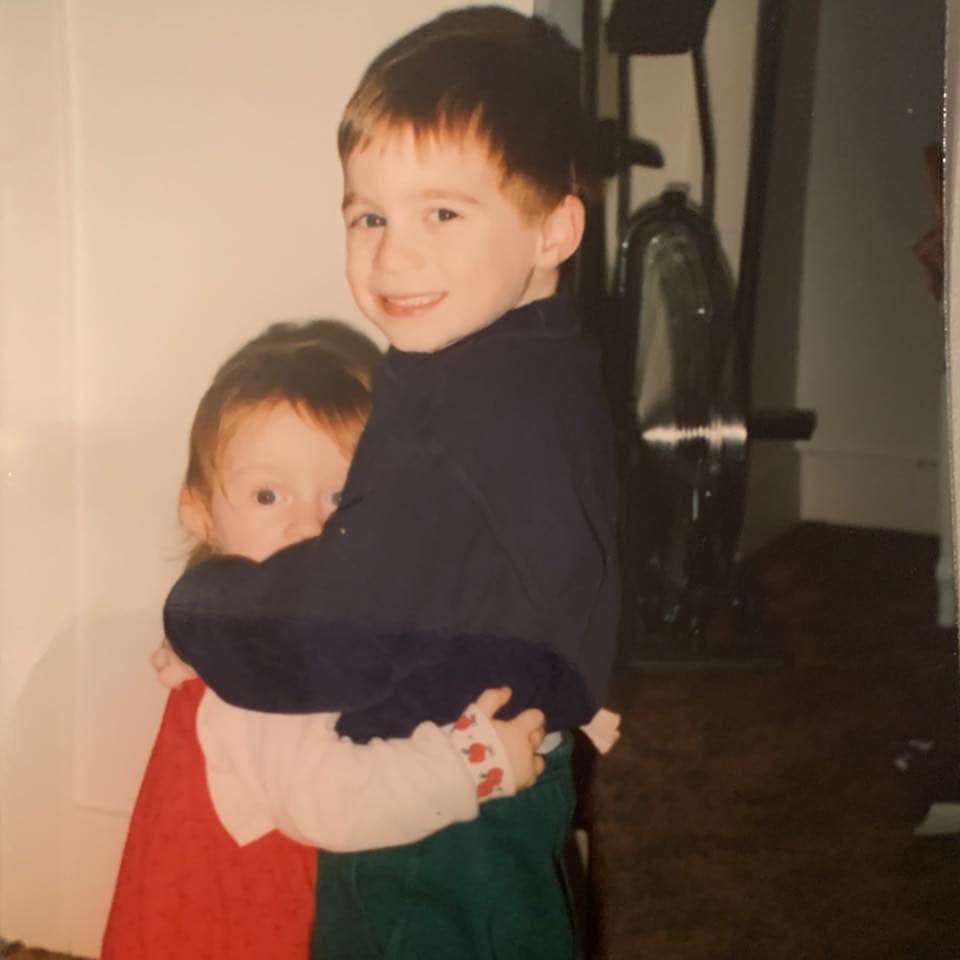
Over the last two to three years, I have been working on a book-length memoir encompassing a tragic series of events in my life, beginning with the loss of my brother to suicide. I understand that this is not the sort of topic every reader has the emotional capacity to handle. Many readers read to escape the horrors of real life. I hope to reach the readers who cannot or will not escape it and instead yearn to connect with others who have had similar experiences.
I’ve crafted and nurtured my memoir through a HerStory Writers Workshop that seeks to produce works that re-imagine the mental healthcare system. This has allowed me to not only get feedback on my work, but read it aloud to a safe, patient, and supportive community of writers with similar experiences. If you plan to publish any work on a difficult subject matter, particularly grief, having the opportunity to read it out loud on a regular basis makes you accustomed to discussing the material with others. This is important if you would like to sell your book and connect with other people who share your pain. If it is too difficult to read aloud and discuss, it might not be time to publish just yet.
You also have to be ready to expect the unexpected. I found particular memories that were horrific in the moment to be easier to write in retrospect, whereas other memories more challenging to write because they were more traumatic in retrospect. In other words, some memories were more tragic to recall than they were to live. Essentially, don’t think you will always know what will be the most emotionally difficult to write.
Also, don’t be afraid to use humor (when appropriate). Some of my funniest memories were in my darkest times. I believe the contrast helps lighten the emotional weight off of your reader while accurately depicting the complexities of life. Of course, if there is not any humor to be found in a memory, don’t force it. But do not feel guilty for finding something to smile about, either. Writing the ins and outs of our trauma does not need to be sterilized for the reader to grasp your pain.
A general principle I abide by for memoir but especially when writing about a lost loved one is to always get your story on paper first. Write down everything you know without influence of another family member, friend, or acquaintance. Your memoir is first and foremost your recollection of events. I have found in my writing that everyone has a different impression of my brother, and some people’s memories of him as a person can be drastically different from one another. But this isn’t their book, it’s mine. After recording my memories, I have gone back and asked some select people I trust to fill in blanks where it may be relevant to the narrative, but I’m not in any way deceptively twisting the narrative or pulling it away from my truth.
Most importantly of all, though, when writing about grief you need to be kind to yourself. Listen to what your body tells you. If writing a few sentences makes your body feel drained, fatigued, or out of sorts, you might be pushing yourself too far. Writing about grief can be a cathartic process for many writers, but it can also retraumatize us. Writing should not be burning you out emotionally, physically, or psychologically. Don’t get me wrong, writing is work; it shouldn’t feel easy, but your health should always come first. If necessary, seek aid from a mental health professional you trust to help lighten the emotional weight. Make sure to have at least one beta reader or coach outside your immediate circle (who preferably does not know the people involved in your memoir) to review your pages in segments as you write them.
I am interested in being this person for you if you are thinking about writing a book involving grief or issues with mental health (as a writing/publishing professional, not a mental health professional). Please reach out if you’d like to talk to me about your project and if you are comfortable, share your own experiences/tips in the comments.
To be notified every time I publish a blog post, please subscribe to my weekly newsletter.
Featured photo from Etu family.
 Hanna Etu
One thought on “Writing on Grief: What I Have Learned”