
For the last few months, I have been in somewhat of a writing slump when it comes to my memoir. We’ve all been there. I think many of us spend more time in the slump than not, unfortunately. We make excuses, like needing to catch up on chores, needing exercise, or just being too burned out from our full-time jobs. Most days, by the time I can even sit down and write, I tell myself I don’t have the mental energy and boot up a video game.
We can come up with plenty of good reasons not to write, the one we cling to the most being “writer’s block.” For a long time, I believed writer’s block was real because I only felt naturally inspired maybe two percent of the time. I thought to be a good writer was to write from that headspace you inhabit only two percent of your everyday life. That was where the magic happened.
If all writers lived that way, we’d have nothing to read. When I was in college, any time a famous writer would visit campus and be asked “what advice do you have for new writers?” they would always say “just keep writing.” It would grind my gears. What did they think we were doing?
But as my writing habits have evolved over time, this sage advice carries a lot more meaning. During lockdown in 2020, I decided to start writing for just thirty minutes per day. Pre-pandemic, I was writing maybe thirty minutes per month, if that. My logic was, it’s more than I was doing before. Since I had nowhere to go, I had to get myself in front of Microsoft Word every single day, regardless if I was in my two percent window of inspiration or not. Even if I only wrote a couple of sentences, I sat in front of the computer for thirty minutes, getting my mind programmed to write. It dramatically changed my writing life.
So, maybe you don’t have thirty minutes every single day. Maybe getting up a half hour earlier every day churns your stomach. What about thirty minutes per week? Five minutes per day? Going from no writing habit to a writing habit regardless of how you structure it is a step in the right direction. You may even find yourself going over your time limit some days.
But, as I said at the start, I did get stuck again. Over these last couple of years with everything being open again, my life became packed with obligations, hobbies, and social activities (all things we desperately needed after lockdown). For a long period of time, I managed to get some writing done on a weekly basis in order to get feedback in my writers’ workshop (another way to hold yourself accountable). Over the last few months of some personal turmoil, burnout, and overall busyness, I just fell out of practice.
As a memoir writer, you’re not coming up with new material, so you’re pretty much just mining your own memories. It’s only a matter of what is relevant to the larger narrative you’re trying to tell for the specific book you’re writing; what will move the protagonist (you) forward on her journey? I’m at a point in the process where I’ve written out the most vivid, obvious points in the story and now have to dig back to the moments in my life that led up to the main events of the book. After such a long period of not writing, I was coming up empty so, while this might seem cheap or just completely obvious, I looked up writing prompts.
Writing prompts can be helpful or frustrating. Ones like “write a story about a parachute without saying the word ‘parachute’” don’t get my juices flowing. However, “what’s your worst fear?” brought me back immediately to swim lessons as a child: me, sitting at the edge of the pool, pulling my knees to my chest, shaking my head back and forth as the swimming instructor pleads with me to get in the water. This reminds me of how I fell into a wading pool as a toddler and became terrified of water, or how long it took me to learn how to swim as a young adult, or when my brother would push me underwater in the pool. All of that from “what’s your worst fear?”
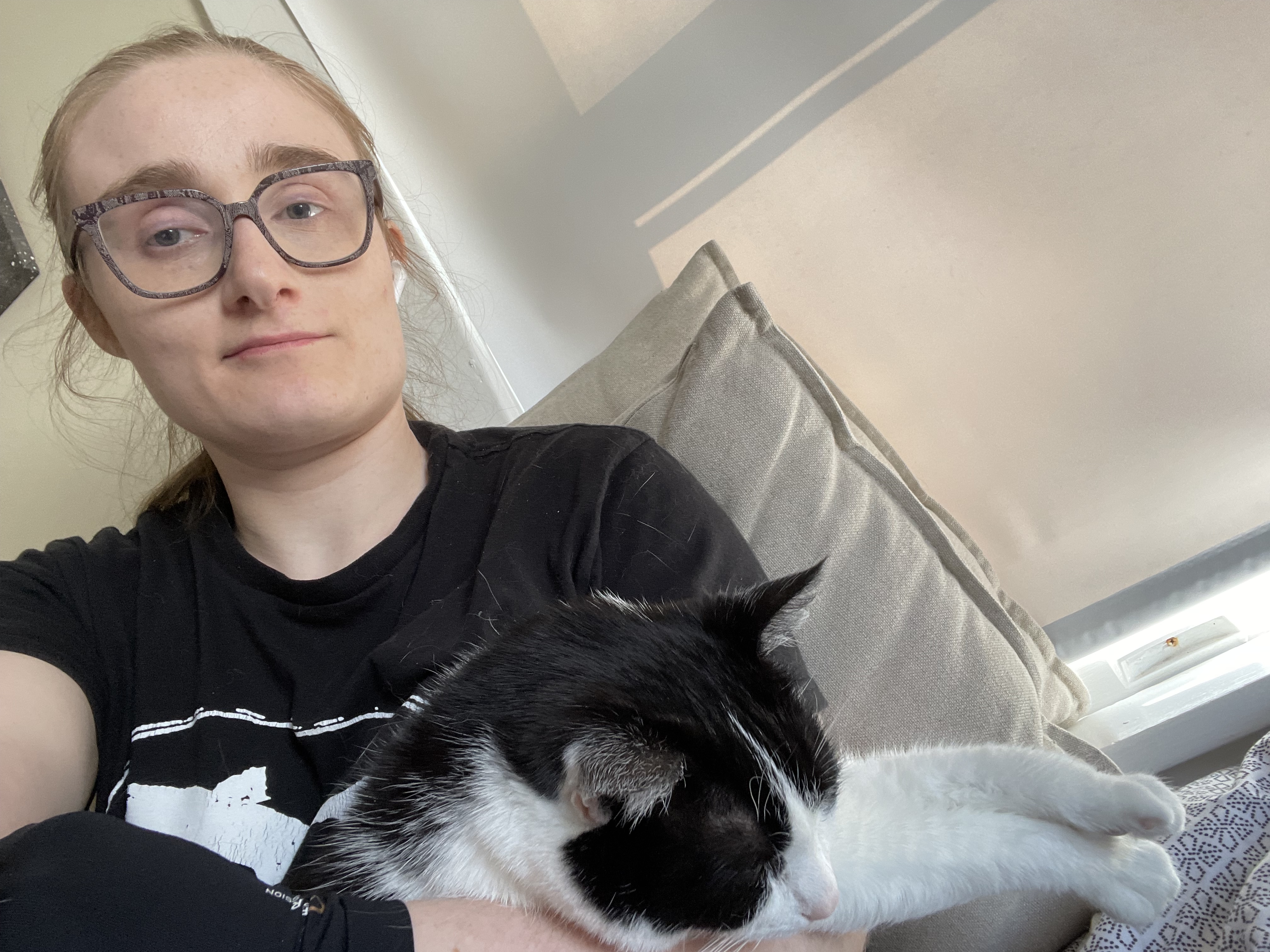
Bottom line: you have to get yourself in front of the computer (or notebook, or speech to text tool, etc.) and start. Even if you write pages of garbage, that’s still pages you wouldn’t have had if you hadn’t sat down and committed to the work. The #AmWriting Podcast’s slogan is “Keep your butt in the chair and your head in the game!” which sums it up quite nicely. Disconnect your computer from the internet if you have to or try a productivity app. Of course, so many of us have cognitive differences that make it difficult to focus and write, and in a later post I would like to dive into the resources and communities available for those of us who need them. Whatever it takes to get you in that chair. And if all else fails, get yourself a lap cat like mine to keep you from getting up!
Featured photo of woman holding blank paper by cottonbro studio.
 Hanna Etu
One thought on “Feeling Stuck in Your Writing Life? Here’s How I Got Myself Out”