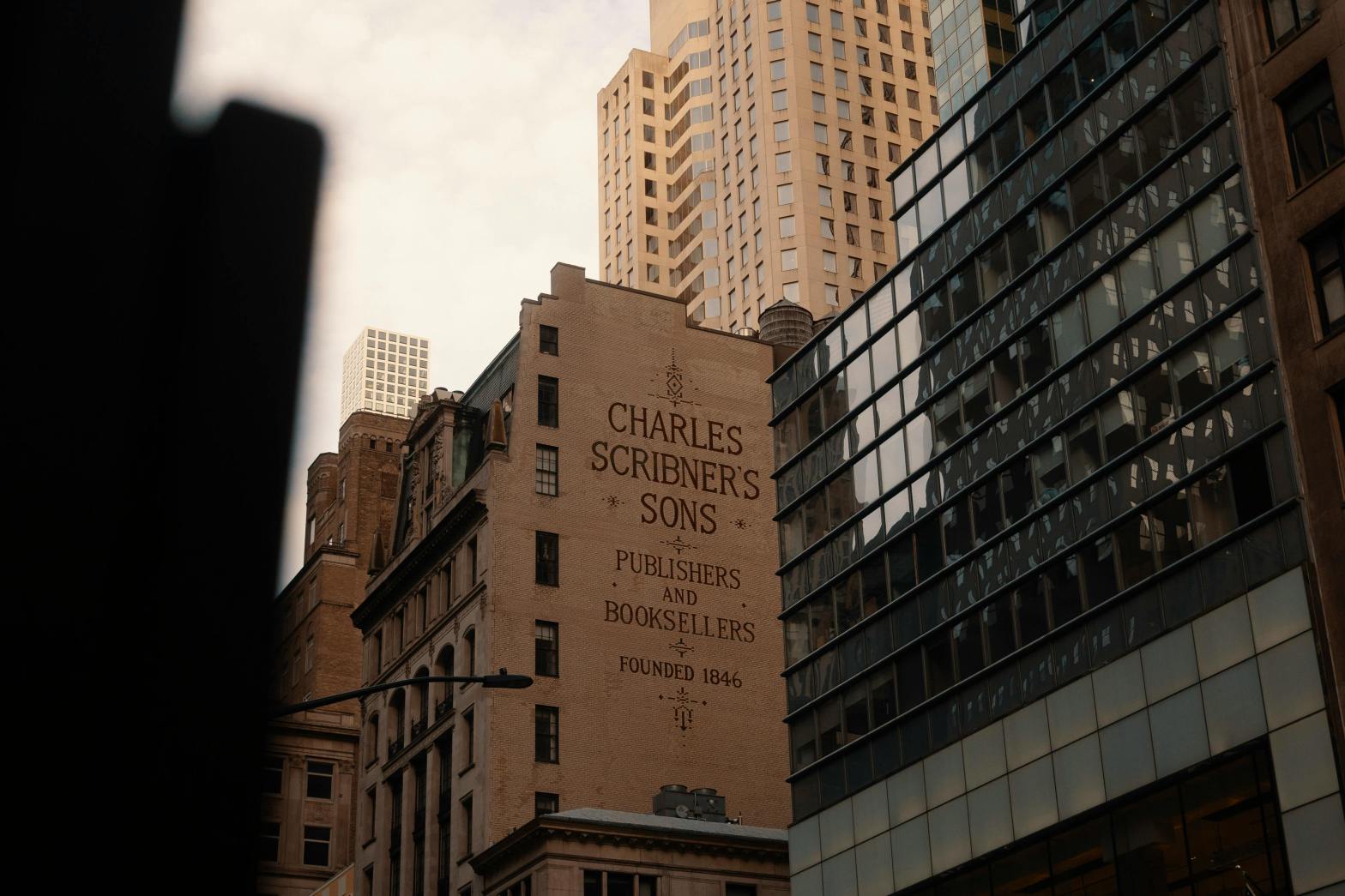
What Will Happen to the Publishing Industry?

Thanks to the United States’s on again, off again relationship with high tariffs in the last few months amidst various other economic uncertainties, the global economy is predicted to experience an economic slowdown and, even more likely, a recession.

Book publishing has seen recessions before, with some devastating consequences. Many major publishing companies including some of the Big Five publishers (Penguin Random House, Simon & Schuster, Hatchette, HarperCollins, and MacMillian) experienced a major decline in sales during the industry’s busiest time of year in late 2008, resulting in mass layoffs. It’s also important to point out, though, that eBooks were rising in popularity at the time. Publishers, industry experts, and book lovers alike anticipated eBooks taking a bigger toll on print books than they ultimately did. As more of a print book lover myself, I was relieved to see eBooks, like audiobooks, add to the market, rather than take something away from it.

There was a silly notion going around at the time of the 2008 recession that books as a consumer item were “recession proof” because they’re cheap (unlike cars and houses, I suppose?). But that’s simply not true. While most US publishers print their books within the US (allegedly exempting books from being tariffed), imported raw material needed to make books will still rise in price due to tariffs. These costs will then be passed on to the consumer. It’s hard to say when or how this will happen; but I can recall even in 2019 when I was laid off from my job at an independent publisher due to financial issues, we had been plagued by paper shortage issues for months. (The paper, as it happened, was being imported from Canada, and we were competing with Big Five publishers to use it.)

During the 2008 recession, the newly emerging online bookseller Amazon was able to take advantage of shrinking wallets by selling books cheaper than any indie (or chain) bookstore and running many out of business. Now, almost twenty years later, Amazon dominates the retail space entirely, and is one of the biggest self-publishing platforms in the world.

I suppose the most encouraging part of all of this for me, and for you, the writer, is that through all of this turmoil, people were still buying books. Even if the ways in which we bought books changed and even if I don’t happen to like the way we’ve all contributed to the downfall of many independent publishers and booksellers, we are still seeking books in whatever form is most accessible to us.

This leads me to other changes in the book world and how these changes might impact authors. Book bans are on the rise because, of course, why wouldn’t they be? What’s always so ironic about these kinds of bans is that they don’t often stem from individual parents trying to monitor their children’s media consumption, but rather, Moms of Liberty-type “activist” groups trying to pull any kind of diverse literature from schools entirely. The American Library Association reported that in 2024 a majority of book ban attempts came from organized movements: “Pressure groups and government entities that include elected officials, board members, and administrators initiated 72% of demands to censor books in school and public libraries.”

A study by Carnegie Mellon University recently revealed that book bans were actually directly linked to increases in circulation of certain books, causing the opposite impact that these political groups seek. Banned books saw circulation increases of as much as 12% after being banned as opposed to non-banned books. My immediate reaction is to think, of course, you tell a kid (hell, any adult) they can’t have something, they’re going to do whatever they can to get it. In effect, it may be a point of pride to find that your book was considered “controversial” enough to get banned. There is attention and readership drawn from these bans.

But is this the satisfying backfire I was hoping to report to you? Not exactly. Book bans are still a net negative for authors, because they mean limited public appearances at readings, schools, signings, etc. Republican politicians pushing book bans in their campaigns tend to pull donations from this messaging whereas, when it comes to book sales, authors only have room for loss. Perhaps sales go up in the states where the book is still accessible, but it’s hard to compensate for sales in an entire state where they are prohibited.

There are so many other ongoing issues impacting literacy, writers, and book publishing (AI, IMLS defunding, OK SB593) that I will have to do another post like this at a later date. As overwhelming as all of this chaos can be, it’s important to stay informed of the issues surrounding this industry, even if not all of it affects you directly. I encourage you to look into how these events are playing out for you locally, and get comfortable calling your Congressional representatives.

I’d love to look into a crystal ball and tell you that all of this will be fine, but we know better than that. My best guess is that things will get worse before they get better. We will adapt, even if that means, for example, choosing alternative methods of publishing we might have otherwise not used in a stronger economic environment, or perhaps innovating new ways to market our books on less censored forms of media. The mission hasn’t changed. We must keep writing because our words, our voices have never been more critical.

If you haven’t already, sign up for my emails so you never miss a new post.

Featured photo by Douglas Schneiders.

Ten Literary Agents Currently Interested in Mental Health and Neurodiversity

Don’t forget to pick up your free copy of my Memoir Marketing Workbook if you have not already!

You might not yet know how or where you would like to publish your book, but it’s important to explore your options. Many writers initially intend to get a deal with a literary agent with the goal of traditional publishing. This is not the solution for everyone, and may not be the solution for you. However, one of the reasons it can go wrong for so many writers is because we don’t take the time to research the agents we are pursuing. Often, we get excited to reach out to an agent because they represented a famous author, or a writer we know personally. But that doesn’t mean they’re interested in publishing the kind of book we’re writing.

This week, I’m giving you a peek into my pitching package and doing some of the legwork for you. The publishing landscape can be especially intimidating for neurodivergent and disabled writers. I’ve compiled a list of ten literary agents with a special interest in exactly this type of work right now.

One more thing before we dive in: this list is (obviously) not exhaustive and is only a small fraction of my agent research process. You’ll notice that I focus more on agents who are taking submissions in memoir and/or nonfiction because that’s what I coach, but several of these agents only take fiction queries. I came across many agents in my research who were looking for memoir but did not particularly mention neurodivergence or mental health, so I decided to stick to agents committed to neurodivergent writers in all genres. I have no affiliation with any of the agents listed. They all appeared to be taking submissions as of the date I published this post.

  1. Jennifer Chen Tran is an agent with Glass Literary Management with over a dozen years of experience in the industry (in various publishing houses and literary agencies). She is seeking both fiction and nonfiction from marginalized voices. Per her Manuscript Wish List, her nonfiction interests include: “…hidden narratives about an unseen aspect of the world, riveting stories about overcoming adversity, and health, wellness, financial peace, and spirituality by BIPOC, neurodiverse, and underrepresented creatives.” You can learn more about her and her submission guidelines here.
  2. Charlotte Wenger has several years of editorial and publishing house experience, now at the Prospect Agency. She’s largely focused on children’s, YA, and author-illustrator books, but her primary adult nonfiction interests are memoir and biography. She has a special interest in stories about social justice and amplifying voices that have not been heard, especially BIPOC, LGBTQIA+, and people who are neurodiverse and/or disabled. You can learn more about her submission guidelines here.
  3. Maria Vicente is a senior agent at P.S. Literary Agency. She is seeking books in adult nonfiction, with a special interest in mental health topics. This would mean if you’re writing a self-development book or a deeply researched book about the mental health system with elements of memoir, this might be the better fit. A straight cover-to-cover narrative memoir, however, might be less up her alley. You can read more about her submission guidelines and interests here.
  4. Lauren Abramo is the VP and Subsidiary Rights Director at Dystel, Goderich, & Bourret LLC. She does, however, maintain a small client list of well-accomplished authors. Two of her many adult nonfiction interests per her Manuscript Wish List are “Nonfiction about the intersection of the healthcare industry and marginalized populations” and “Accessible reportage on contemporary social issues, especially inside perspectives on communities that are often neglected.” She’s also interested in middle grade fiction by neurodiverse authors. More info can be found here.
  5. JL Stermer is the founder of and agent at a relatively new agency called NEXT LEVEL LIT. She has years of experience in the publishing industry and plenty of well-known clients. She is seeking memoir with an interest in mental health, feminist issues, social justice, and human rights. Queer, neurodivergent, and BIPOC writers are encouraged to submit. More info can be found here.
  6. Julie Gourinchas is an agent at Bell Lomax Moreton largely seeking fiction writers with a very specific list of interests you can learn more about here. She is particularly interested in writers typically underrepresented, including disabled, neurodiverse, trans, nonbinary, queer, and BIPOC writers. When it comes to nonfiction, per her agent page, “she is keen to read in the narrative and ‘big ideas’ spaces, particularly in the realms of politics, history, and the social sciences.”
  7. John Baker can also be found at the Bell Lomax Moreton Agency and has a reputation for representing traditionally underrepresented and neurodiverse authors. He is currently seeking speculative fiction, including adult and YA fantasy, but you can read more specifics on his agent page here.
  8. Alexandra Weiss started her literary career in 2016 (fun fact: the same year as I did!) in book publicity and marketing, but became an agent in 2021. She’s committed to diverse stories (fiction and nonfiction, particularly those by neurodiverse, genderfluid, disabled, and other marginalized writers. She’s interested in various fiction, graphic novels, middle grade, but only interested in memoir if it is a hybrid with a nonfiction book (straight, narrative memoir would not be a good fit). You can read more of the specifics here.
  9. Stefanie Molina-Santos exclusively seeks clients who have been underrepresented in publishing. She can be found at Ladderbird Literary Agency and while she is primarily seeking picture books, middle grade, YA, and adult genre fiction, she has some specialty interests in adult nonfiction as well. Note that stories centering around suicide, self-harm, or abuse are not for her (unless simply included in backstory, and should still include a trigger warning). For more details read more here.
  10. Tara Gilbert is another agent strictly in the fiction space but is dedicated to serving writers who are body diverse, neurodiverse, POC, LGBTQ+/QUILTBAG, and disabled. She is an Associate Literary Agent at KT Literary with interests in several areas of genre fiction, middle grade, author-illustrators, and YA. For more specifics, take a look at her wishlist here.

Please remember to adhere to all submission guidelines before submitting a query and/or proposal. It might seem tedious, but it will save you so much grief in the long term. If you’re looking for guidance with this process or with finding more agents, reach out for a free 30-minute call with me.

Featured photo by Tima Miroshnichenko.

Ten Pitching Tips for Neurodivergent and Psychiatric Survivor Writers

If you haven’t done so already, please grab my free workbook for marketing your memoir.

One of the most exciting—albeit nerve-wracking and often demoralizing—stages of the publication process is the pitch stage. You’ve put in the work—outlining your book, enduring painful rounds of feedback and revisions, drafting a proposal, and approaching your book as a product to be positioned in the market—and it is finally time to send it out into the world in the hopes someone will want to publish it. We can’t kid ourselves into thinking this part is easy, in fact, it’s probably the most discouraging stage of them all; enduring one rejection after another is part of being a writer. But we can discuss some ways to make this process easier and hopefully increase your chances, especially from the perspective of someone in the neurodiverse, mad, and/or psychiatric survivor community.

I’m speaking to this community specifically because, as I’ve written on the blog before, I’m seeking to serve this population of writers in my own coaching work. Works from neurodiverse but especially psychiatric survivors are severely underrepresented in the literary marketplace, and I’m on a mission to change that. Some of these tips apply to any query or writer, but I’ve tried to tailor these suggestions to writers from the neurodiverse/mad/psychiatric survivor spaces.

  1. Keep it brief (400 words or less). It’s easy to get carried away when telling your story. Unless a book is highly technical, we do not need more than 400 words to cover all of our bases: an explanation of why you chose the agent, a short summary of your book, some recent comp titles, and a few sentences about yourself. I say it all the time, but agents have limited time and attention. Anything going over a page will allow their thoughts to wander.
  2. Explain potentially complicated terminology. Words we use frequently in the mad/neurodivergent communities may be unfamiliar or be defined differently in neurotypical spaces. You may have your own definition of what it means to be “mad,” “mentally ill,” or “neurodivergent.” If your definition is not what you think most people’s brains will immediately go to when reading your query, explain it.
  3. Deeply research the agents you’re querying. Pay attention to what they are seeking RIGHT now. You should know not only exactly what kinds of books they’re looking for; check out their social media, their publishing history, their most recently signed authors. Get acquainted with their values by seeing what they post on social media and the other underrepresented groups they’ve worked with. Don’t pitch to an agent simply because they represented someone you admire or a book you love (especially if it’s not even in your genre). They may no longer be seeking that type of work anymore and you’ll be wasting yours and the agent’s time by querying them.
  4. Stick to the facts and your story. If there are larger implications to the story you are telling, cite reputable sources for your claims. Use statistics to prove there is a readership/a need for this work in the literary space. There will be space in your proposal to expand on the bigger sociopolitical issues you’re bringing awareness to with your book, so stay concise, stay with your story, and stick with facts that the agent can pluck out of the letter.
  5. Know that you will be stigmatized, and that’s not on you. No matter how we mask ourselves, being neurodivergent, mad, psychiatric survivors, however you identify, people will make assumptions. They might do this consciously but more likely subconsciously. All you can do is prepare and protect yourself internally. Be conscious of these stereotypes but remember that these have more to do with the ignorance of others than they have do with you. If someone is unwilling to understand your struggles, thank them for their time, and move on.
  6. Remember that this is a business transaction. If you are going the traditional publishing route, this is essential to understand. The agent may be as passionate as you are about bringing awareness to neurodiversity or injustices in the mental health system, but they need to be able to prove they can sell the book. Anything you can do to speed that up for them will work in your favor. We can’t count on the agent to connect all of the dots as to how the book will sell.
  7. Stay away from broader statements that may come across as demonizing a group or institution. If you’re unsure how your audience may receive a particular opinion, speak as objectively as you can. For example, psychiatry can be an angel or a devil for folks, so some may not be receptive to statements condemning the practice entirely. Unless you know you’re on the same wavelength with the agent or editor on a particular topic, stay tied to how you personally have been effected and/or the statistics that support your arguments.
  8. Look for agents, editors, and publishers who make accommodations for people with disabilities. How simple is their submission process? Do they say they wish to serve disabled and/or neurodivergent writers, but do not provide the appropriate accommodations? This could be a careless oversight or simply a desire to streamline processes, but it could very well also be a red flag.
  9. Leave them wanting more. Do you hate that movie trailers these days seem to show you the entire movie in a span of two minutes? They so often leave you feeling, why should I even bother watching the full movie? The folks at “The Shit No One Tells You About Writing” Podcast talk about leaving “curiosity seeds” throughout your pitch, little hints at what’s to come without fully giving the story away. Give your reader an idea of what you’re up against in your memoir and the journey you’ll take, but leave them longing to know what will happen next.
  10. Hire an editor and/or coach to read through your letter. An editor can make sure your letter is free of spelling and grammatical errors, making it look polished and professional. A coach can read through your letter and provide feedback based on the substance of your letter; ie. are the comps the most relevant to your book, is your summary strong, are you bringing up the most relevant details in your bio, etc. Whether you need an editor, a book coach, or both will depend on which stage you are in your process and your experience in the industry. Feel free to book a discovery call with me to figure this part out.

It’s additionally important to invest the time in understanding the different ways to publish and understand which path is best for you. I’ve written a blog post breaking this down but there are plenty of other online resources available to help you should you need more information. Since so much of what we consume as readers is from the traditionally published space, most of us tend to assume that traditional publishing is the best path for us. But there are advantages to self-publishing and hybrid publishing as well, that could lend themselves to this particular subject matter.

If you are publishing a book with a strong message to bring about change in a specific industry, you not only wish to get that book in the hands of as many readers as possible, you also will likely require significant creative control over the project. Traditional publishing can help with wider readership, but self-publishing and hybrid publishing can give the writer more creative control. These are all things to consider.

If you’ve exhausted the free resources available to you and are still looking for additional guidance on your pitching journey, feel free to reach out to see if hiring a book coach may be the next step for you.

Again, don’t forget to grab my free resource to kickstart your marketing process here.

Featured photo by Tima Miroshnichenko.

How to Avoid Trauma Tropes in Your Memoir

Before I get started, don’t forget to grab your free guide to marketing your memoir here!

Try to recall the best memoir you’ve ever read. Was it a happy, funny, or just generally smooth sailing kind of story? Or was it more of a tragic one; a story of abuse, loss, or overcoming adversity? My guess is that in most cases, your answer will be the latter.

Unfortunately, popular memoirs in our literary marketplace are more often about trauma, and less about the positive shared experiences of humanity. This can be done well, because trauma and adverse experiences often bring out our creative strengths as writers. We’re more prolific when we are able to reflect back on the difficult things that have happened to us, because we’ve been forced to think more deeply and introspectively at life than those who have not experienced major trauma. Writing is a therapeutic way to release some of the negative experiences from our consciousness.

However, there are plenty of ways this can and does go wrong—in our own writing and in the publishing space. We should first entertain the idea that not all of our recollections are meant to be published. Sometimes when we find writing therapeutic, we should take it for exactly what it is: therapeutic. A memoir is not a diary, a journal, a blog, a record, a travel log, a list…you get my point. Your memoir is a narrative of a set time period in your life, of your personal experiences, with demonstrated self-reflection and understanding of the events that transpired. If you find you are writing more for the purpose of “getting it all written down” but less so reconstructing events in a way that a reader could reasonably follow, you may not be writing a memoir, and you are definitely not ready to be published.

But let’s move on from that possibility. Let’s say you’ve done your journaling, reflecting, and moving forward from the events in your life, and you’re ready to set the timeline, outline your memoir, make sense of everything in a way that you believe will reach your reader. What are some of the most common mistakes writers make when writing about trauma?

The biggest issue that I see discussed in workshops, courses, articles, etc. is the distinction between drama and trauma. Fiction writers create drama (or “stakes”) in order to make their stories sell. With memoir, our lives create the drama for us, but that doesn’t mean we should take advantage of it. Many memoirists have paid the price for embellishing their own life stories for the sake of getting a bestseller, only to sacrifice their integrity and notoriety.

Yes, our traumatic experiences are the catalysts for our stories, and they could be the reason why we attract a reader who wouldn’t otherwise pick up a memoir from an unknown author. I’ve picked up books by writers simply because they struggled with mental health issues, or lost someone to suicide, or just lost someone in general. However, the trauma shouldn’t be what carries the book. Your vulnerability, your introspection, your personal connection with the reader is how you do that.

To be clear, this is what I think people mean when they find certain memoirs to be “whiny”; when an author spends the entire book harping on the bad thing that happened to them, but not enough time being vulnerable enough to discuss how it made them feel, reflect on how any of their actions played into the events that occurred, or just generally have enough space from the events themselves to be able to look back on their own personal growth since said events happened. To fail to connect life experiences with emotionality, personal vulnerability, continued growth, and even the larger issues they’re highlighting fails to make room for the reader of your memoir. This also distinguishes journal from memoir. A memoir is just as much for the reader as it is for the writer, if not more.

So, how do we avoid these pitfalls? The answer is simpler than it seems. The classic adage of “show, don’t tell” applies well here. Memoirists sometimes make the mistake of throwing in little details of slightly traumatic things that happened to them to amplify the drama: falling off a bike as a kid; your mom forgetting to make your cake for twelfth birthday; failing an English test in ninth grade. But these in and of themselves are common experiences, not traumatic experiences. Perhaps you find falling off of your bike to be traumatic because your parents never paid any attention to you as a kid. Show the reader this in practice and the bike incident as the consequences of their actions. Maybe the English test was your last chance at passing ninth grade, and you had to get held back a year, which led to you and your bully being in the same class, which led to more trauma. Break all of this down, scene by scene.

I’ll reiterate that the biggest lesson here is time. Reliving our traumatic experiences is, naturally, traumatic. We need time and distance from these memories in order to look back on their impact and how we’ve grown. This is not to discourage you from writing about these events as they’re happening. Documentation can be critical in many adverse experiences, and journaling is still an important practice. But remember when moving to the publication stage that we are not only in a state of documentation but conversation. We want the reader to feel fulfilled from our work as much as we did from writing it.

If you’re looking to publish your memoir, I provide a variety of coaching services to help writers finish their books and get them published. Please reach out with any questions, and don’t forget to grab your FREE Memoir Marketing Workbook.

Featured photo by Alexander Mass.

Write Like Nobody’s Watching

Before I get started, don’t forget to pick up your free copy of my Market Your Memoir Workbook to get started on selling your book, no matter where you are in the writing process.

This week we are having one of those “teaser” spring-like weeks where the sun emerges from the clouds for a day or two and gives off the illusion that winter is over. The only signs that we’re not totally free from the gray cold are the dirty mounds of snow still melting on front lawns and occasional gusts of wind that are becoming more and more frequent. The day I’m writing this, I took advantage of the brief warmth to get out, walk, and enjoy the sampling of spring.

I was quickly reminded of something my friends often say about why they dislike exercising outdoors, be it running, biking, or just walking: a discomfort with being perceived. This fear of being “perceived” is something I forget about most of the time, until I’m trying to cross the street at a stop sign—or, god forbid, a crosswalk—and I find myself wishing to disappear into the pavement as if I, somehow, have done something wrong. I get squeamish just for taking up space (while I internally knowing I have every right to inhabit it).

I realize this is a relatively common feeling. Many people avoid going to the gym or exercising outside during the day for fear of being perceived. People set up home gyms or do workout videos at home to keep their exercise to themselves; or even feel more comfortable in classes because everyone is being “perceived” simultaneously, instead of individually.

All of this reflection made me think about how I would behave if I wasn’t in constant fear of how I was being perceived. I do not mean only with exercise, I mean how I would act, what I would do every day, and what would I write if I really thought nobody would read it? As most content creators know, the hamster wheel of content creation can quickly burn you out. I can usually plan weeks, even months of blog posts in advance and churn out a couple weeks of posts in a few days before completely losing my mind. But even with all of the strategies I’ve learned, I haven’t quite gotten the whole thing down. All of the planning in the world cannot produce motivation, especially when you feel hardly anyone is reading what you write.

Let’s also not forget the constant internal conflict of wanting to provide useful, practical content while still writing genuinely and acknowledging that all is not quite right in this world right now. We cannot continue to write, edit, coach, and publish under a protective dome from the circumstances surrounding us. We have to do all of these things in spite of the world and because of it.

All of that preamble leads me to ask, what would we do if we weren’t being watched, what would we write if we did not think anyone would read it? Can you write like nobody’s watching?

Phoebe Waller-Bridge says at the end of her book Scriptures (a print version of the scripts from her incredible series “Fleabag”): “Write like you are not afraid.” This is followed by a blank page or two for you to write your own “scriptures,” so to speak. I, unsurprisingly, have been too apprehensive to dirty the holy pages of my own copy. But she’s giving us a mandate here, our mission: to write without getting in our own way.

What would you write if you were not afraid? What would you write if you thought nobody was watching?

A challenge I hear from so many memoir writers is the fear of how others will react to their writing should it ever be published. What will their loved ones think? Will their abusers from their past retaliate? Will people who care for them judge them for things that the writer did in the past?

I have felt this fear too.

My fear, when it comes to writing and life in general, has only mounted lately. Life in the US is only getting more stressful, confusing, expensive, and terrifying. I cannot claim to know what it’s like to write without fear. If I were to write like nobody was watching, I would write to try to appeal to the powers that be to somehow learn empathy for those who are less fortunate (or simply different) than them; for those who fear what they do not understand to seek understanding. If I were to write unafraid, I would write freely about those that have hurt me without concern for retaliation.

I say with absolute certainty that we will never write authentically until we write as if we are not afraid of what other people will think; if we write as if nobody will ever read it. In some cases, maybe nobody will read it, and that’s okay. It is better, in my personal opinion, to write something with your whole heart and keep it to yourself than write something only from a surface level of emotionality and share it with the world, expecting readers to connect with you as if you’ve shared your complete self.

To me, writing as if nobody is watching is to write without fear of making mistakes, being judged by others, or being retaliated against. As I said, I’m still working on finding this voice myself. What I do, and what I recommend you do, is to seek this voice by really, truly pretending that nobody will read what you’re writing. Cut out the inner critic telling you what does and doesn’t want to be heard; the expectations of family, friends, readers—genuinely try writing just for yourself. Do this until what you write demands to be read, to be witnessed, to be “perceived.”

Featured photo by Tara Winstead.

To never miss a week of content, please sign up for my weekly emails. I greatly appreciate it.

Eight Tips to Tighten Up Your Book Proposal

Before I dive in, I would like to remind you that I have a free workbook for marketing your memoir available now. Please check it out!

As we discussed last week, your book proposal is of your biggest assets in your book pitch, even (or especially) as a memoir writer. But as many writers and book coaches can attest, book proposals can get messy very quickly, and you do not want to fall into some of the most common traps I’ve seen when reviewing book proposal drafts.

As a disclaimer, I would like to say that these tips are based on my training, expertise, and experiences with reviewing book proposals. We are all human, and we all have different ways of trying to present ourselves. Sometimes we go over-the-top confident while other writers can be completely understated. Don’t take it too personally if you’ve done all or some of these things. We’re here to learn and improve.

With that said, let’s begin.

1. No frills.

Do not use funky fonts, letterheads, fancy frames, graphics, etc. Stick to Times New Roman or Arial font. It’s tempting to make your proposal visually exciting in order to stand out on an agent’s desk, but in this digital age, agents are more commonly jumping through PDFs or forms they’ve set up on their websites. Even in print, if they see a stack of blue-colored papers among a sea of standard submissions, it’s not going to have the impact you hope it will. More than likely the agent is going to think you are someone who is not taking your writing seriously and needs fun colors and fonts to get noticed instead of letting your words speak for themselves. Don’t be like this.

2. No extra graphics/pictures.

The only picture necessary is your author photo. Any other photos will distract the agent from the substance of your proposal. The exception to this is if you are publishing an especially visual book that would contain a large number of graphics, and you need to provide examples to demonstrate what the book will actually look like.

3. Stay concise.

Condense, condense, condense! Exceeding recommended word and/or page counts will not get you extra points—in fact, quite the opposite. Anyone who grew up with me knows I have always struggled with this. However, keeping your ideas condensed will pay off immensely in keeping the agent engaged in your argument and showing them that you have the ability to efficiently convey your ideas.

    Some approximate guidelines:

    • Overview: 1–3 pages
    • Author Bio: 1 page
    • Audience Analysis: 1–2 pages
    • Competitive Titles: 3–4 sentences per comp
    • Annotated TOC: 2–4 pages, depending on the length of the book/number of chapters
    • Marketing Plan: depends on the level of detail in the marketing plan but it should be several pages
    • Sample Chapters: about 40 pages

    4. Stick to the required materials.

    In the same vein as keeping it concise, do not start experimenting with industry standards by including extra and unnecessary materials/sections. There is a standard for organizing a book proposal for good reason, and bending these guidelines will only get in the agent’s way of finding what they need. Your time is better spent refining your problem areas than fluffing up the proposal with extra material the agent did not request. This also goes back to the concept of most agents taking submissions through a form, and extra sections will not fit into these online forms.

    5. Ditch the dated competitive titles.

    You should stick with books published in the last three to five years at most. Anything older will weaken the credibility of your comp section because it will not be able to show the current commercial viability of your book. Keep them new unless you have a staple, bestselling title. Even in that case, be careful not to compare your book to an anomaly in the market. We’re not going to be the next Cheryl Strayed, Elizabeth Gilbert, or David Sedaris. Trying to convince the agent such a thing is just wasting everyone’s time (most of all our own).

    6. Stick to your genre.

    This applies to all areas of the proposal. Do not jump into magical realism in your author bio or throw a poem into your overview for your nonfiction book. Many of my suggestions, you can probably tell, are about removing things that writers might feel add a bit of “pizzazz” to the pitch. However, to an agent or an editor, it can come off as someone who is not letting the real work stand on its own. After all, while we are creating art, the proposal is part of a business transaction.

    7. Step into your authority and voice, but keep it professional.

    There is a delicate dance we do when it comes to writing as our authentic selves while keeping a professional tone. Not every editor or agent will respond well to curse words or being spoken to like your buddy at the bar. Write with confidence in your opinions and your story but remember your overall purpose: to form a business relationship. Read and reread your language, looking for passive voice, for “may” and “maybe” and “might” and all of those uncertain words.

    8. Have your proposal professionally copy-edited and/or coached.

    You are pitching your passion project, your finest work; you want this proposal to be as clean and polished as it can be. If you have never created a book proposal before, I highly recommend getting a book coach for your first proposal. This would give you in-depth, developmental feedback from someone with market expertise. If you are more seasoned with the process and the publishing industry, you are less likely to be reading this, however, in that case, I would likely recommend only a professional copy-editor. But in most cases, I recommend both.

    I encourage you to take advantage of the Internet’s vast library of resources on crafting your book proposal, as this list is not extensive. If you are looking for a quick way to start brainstorming for your next memoir proposal, check out my free memoir marketing workbook. If you’re ready to work with me on your next book proposal or just have questions about book coaching, feel free to schedule a free discovery call with me.

    Featured photo by Cup of Couple.

    Why Your Memoir Should Have a Book Proposal (Even if It Does Not Technically “Need” One)

    When most of us think of memoir, we think of “straight,” narrative memoir. Think: “it reads like fiction.” Fiction does not require a book proposal to be pitched to agents or publishers. The query and the writing speak for themselves. Sometimes agents want to see a few sample chapters first, but eventually, if they are interested, they will request the full manuscript. With narrative memoir, you’ll want to complete the full manuscript before pitching.

    What differentiates memoir and fiction from nonfiction during the pitch process is the necessity of the book proposal. The proposal is a set of materials required for pitching a nonfiction book that shows an agent or publisher why you are the best person to write your book, who your audience is, why your book will sell, and how you will sell it. Can you see already why this can be helpful to any writer trying to get published, regardless of genre?

    For those who are unfamiliar with book proposals, the industry standard is ten sections: a title page, table of contents, manuscript specifications (word count, graphics, etc.), overview, author bio, audience analysis, competitive titles, annotated table of contents, marketing plan, and sample chapters. I’m not going to dive too deep into the details of each section here, as there are plenty of free online resources available for writers who are unfamiliar with standard proposal requirements. However, I would like to highlight some of the specific sections and discuss how they are particularly relevant to memoir writers when pitching their work, and how having one, regardless of whether or not it is required, can be a great way to stand out from the thousands of memoirs in agents’ inboxes.

    In general, including a book proposal in your memoir pitch (or having one on-hand) shows agents and editors that you, the writer, have an advanced understanding of your market. Your author bio gives you the opportunity to introduce yourself on a higher level than the query letter; you can demonstrate what makes you interesting and especially qualified to tell your story beyond the fact that it is, of course, your story. What experience, connections, or accreditations do you have that might make the reader care about your story?

    Your audience analysis section especially is the place to stand out from other memoir queries because it allows you to very, very specifically identify your reader. I discussed how to do this in more detail in a post a few weeks ago. But defining this person is incredibly important to show potential agents that you have given extensive thought to the real people who will pick your book off of the shelf and purchase it. By painting a clear picture of this person, you’re making the agent’s job just a little bit easier in that they don’t have to ask themselves: “who will buy this?”

    This is not intended to sound insensitive. We would all like to believe our book will be a bestseller and that people will care about our story. But the fact is that agents see far too many queries in a day to pay attention to something they cannot sell. If we do just a little bit of the work for them as the writer, it gets the wheels turning and gives us brownie points for showing the agent that we understand our book’s positioning in the market.

    Another place to make our memoir proposals shine (and stand out from other memoir queries) is the marketing plan. When you develop a marketing plan, you are showing the agent (or editor) all of the places you have already strategized to meet your ideal reader exactly where they are. You are demonstrating that you put deep thought into how you can discuss your book through various types of media (guest posts, speaking events, interviews, etc.). This is critical because it shows agents and editors that you are not only talking the talk, but walking the walk; you are prepared to put in the work needed to sell your book. You understand the complexities of the market, can sell your book, and have a detailed, step-by-step plan to do so.

    Are you perhaps writing a memoir with prescriptive, self-help elements, or a memoir that is more of a hybrid with nonfiction elements? A book proposal would be a nonnegotiable in either of those instances. The better you can pinpoint your subject matter in the marketplace, the better.

    The bottom line here is that when you want to stand out from the thousands of submissions literary agents see every day, it’s not about special fonts, famous friends (I mean, maybe…), or garnering sympathy. It’s about the strength of your voice, the impact of your story, and your grasp of the market. The memoir publishing landscape is unfortunately one of the most difficult to sell in. So, we have to do whatever we can to get noticed.

    If you’re ready to start working on your memoir (or nonfiction) proposal today, feel free to contact me and I am happy to help with whatever you need.

    To better hone in on your marketing plan, grab my free Memoir Marketing Workbook now.

    Featured photo by RDNE Stock project.

    How to Talk to People About Your Memoir

    Publishing your book—putting it out into the market—involves talking about your book, a lot. For some writers this comes easily. For most writers, because we tend to lean more introverted (or at least the solo type), this does not come easily. However, being able to discuss your own personal story after publishing your memoir is a particular kind of talent that requires practice, discipline, and mindfulness.

    The first mindset shift you will need to grasp is that once your work is public, your story is not entirely yours anymore. By copyright it is, of course, but the interpretations, meaning, and emotions evoked from it will all be special to the individual reader. People will see themselves in you (or other characters in your book) and relate the narratives to their own experiences. Through this process, your story becomes universal and beloved, but it also takes on new ownership. It belongs to your readers in whatever meaning it holds for them.

    What does this mean for you, the writer? You need to be able to step back from the writing and understand that your story has taken on a level of collective ownership, that anything that has been published is open for public discussion and/or interpretation. This is a good albeit challenging thing for any writer, but especially challenging for memoir writers because people will make assumptions about your own life. If you carry anxiety about how you or your book are being perceived at this stage, this part of the process is about how you decide to think about and respond to it.

    Before your work is published—before any readings, speaking events, publication parties, etc.—get clear with yourself about what in your life will be public and what will remain private. There may be questions about your stories that involve details you left out for your own (or others’) personal privacy. Know where your line is before the questions are asked; because, for readers, there will not be one. You may be openly discussing events that are re-traumatizing, and your audience can sometimes forget that. Mentally prepare yourself for the personal questions and how you will answer them.

    As you do mentally prepare, try as best as you can to learn how to laugh at yourself. The more we can laugh and self-depreciate, the more comfortable we become with being vulnerable and self-aware in front of others, particularly strangers. We’re not always writing about topics that are easy to laugh at, but in most cases, we are able to find wit in how we communicate about them. Don’t force it, but try to find the humor that brings comfort and ease with how you communicate about difficult subject matter with people you’ve never met. It will help.

    The last personal aspect I’ll point out here is to assess with yourself if you believe your readers may make any assumptions about your public persona based on your writing, and if this is of any concern to you. Some people let others’ opinions and perceptions roll off of them. But many of us in the creative fields are hyper aware of how we are perceived. It’s best to internally reflect on our own personal insecurities that could impact what we might predict for ourselves and our audience in this particular situation. Remember that the act of publishing a memoir itself is a courageous and vulnerable act that most of your audience is not and will not be capable of accomplishing. Not to mention, if they are communicating with you (in person, on the internet, or otherwise), they took the time to read your work. Regardless of whether or not they end up liking the book (or liking you), the reader taking the time to communicate with the writer is a reflection on the impact of your words.

    Speaking practically, set yourself straight when it comes to any legal precautions you have taken in telling your story. If there are pseudonyms utilized throughout the book to protect yourself and/or others, get used to using them in conversation. If there are stories in your memoir that had to be written in a specific way for legal reasons, consult with proper legal counsel before discussing these stories in public. Were there certain terms that needed to be avoided? Any content that had to be cut from the book before it went to print? Pay attention to these in advance to protect yourself.

    Moving outward and bringing this back to the bigger discussion on marketing, remember what the overall message of your book is. Readers will likely want to dig into little details and interesting little anecdotes, which will lead to fun discussions. But do not lose sight of the goal you set out for the book, who and what you are representing (you, your publisher, and your product), and your overall mission for the entire project. Certainly, discuss the little elements and see where those conversations evolve, but always remember why you wrote the book and why you decided to publish it. This will keep you talking about all of the things that deeply matter to you, and your readers will see that.

    If you’d like further guidance with getting your book written, published, or marketed to your audience, please feel free to contact me as I am currently taking book coaching clients.

    Please also check out my free workbook on How to Market Your Memoir for a quick head start on helping get your memoir out into the hands of your readers.

    Featured photo by Kaboompics.com.

    Do You Know Your Memoir Reader? (Hint: It’s Not Just “People Like Me”)

    I don’t know much about birds, personally, other than their genetic ties to dinosaurs which automatically make them more interesting to me. But I could hardly identify the various species in the wild, or, as they sit in my window feeder, entertaining my nearly nine-year-old tuxedo cat. Watching the birds (and sometimes attempting to catch them from the other side of the glass) is one of Leia’s favorite activities. It keeps her stimulated in her otherwise lazy, easy life.

    When I bought the feeder, I ordered the cheapest, most generic bird feed I could find. Leia is on an expensive, prescription diet, but I’ll pinch pennies for the wild birds. I didn’t do any particular research on what kinds of feed attract which kinds of birds. Any small animal with wings that wishes to entertain my cat is welcome to drop by.

    You may be tempted to take a similar approach when seeking out readers of your book. Everyone is welcome. You don’t want anyone to feel like your book is not for them. Universal feed for everyone (yes, I know, I’m comparing readers to birds, but please bear with me). It’s understandable why you would feel the need to appeal to everyone, but this is a mistake.

    “If you’re not marketing to someone, you’re not marketing to anyone,” is a phrase commonly thrown around in the publishing and online marketing communities. But what does it mean? It means that, like it or not, your book is a product, and in order to market it, it must be treated like a business. Just as you wouldn’t market say, a special hairspray to “everyone” but rather, individuals with particular hair types that would benefit from that kind of hairspray, you would want to market your book to the exact type of people who would especially benefit from your book. Others might still buy the hairspray, perhaps performers, people who work with wigs, etc. But people with special types of hair will especially buy it because it is a product tailored specifically to meet their particular need; those folks need to find the product first and foremost for it to be successful. That’s what your book should do for your reader.

    But I’m writing a memoir, you might be thinking. My story isn’t a product, or a service. My story is a shared experience. Yes, and a product your reader will purchase off the shelf in a bookstore or an online retailer. Even if you think your story isn’t extraordinary or “providing a service,” your reader is still seeking your book to fill a need, ease a frustration, or feed a particular curiosity. Before you can imagine the thousands of readers turning your book into a bestseller, you first need to imagine that person; the one in the bookstore, seeking out your book to fill that ache in their heart.

    How old are they? Are they a they, a she, a he, etc.? What do they do for work? What kind of neighborhood do they live in? What are their hobbies? Where do they spend their free time? Where, in the course of their average day, would they learn about a book such as yours? A podcast? A television interview? An article online?

    All of this data will be critical to understanding how to meet your reader where they are and how to market your book to them. But your most important question to master, of course, is: what problem is your reader trying to solve?

    We’ve established that this is an awkward question. What kinds of problems are memoir readers trying to solve? This feels like a strange reason to pick up a memoir, certainly. So, think about the last time you picked up a memoir, and why you decided to do so. Likely, it was written by a famous person, perhaps a celebrity, or just a writer you trust. But let us think about the unknown writer. When was the last time you read a memoir by someone you did not recognize? What innate need was the book filling for you? Were you looking for someone who had been through a traumatic experience similar or parallel to your own? Were you looking to educate yourself on a life entirely different than yours, in order to better understand your privilege? Were you looking to better understand history tied to your own cultural identity?

    Maybe you’re realizing that you don’t pick up memoirs from writers you don’t recognize, or that it’s been a very long time since you have done so. This is the main issue for agents when considering whether or not to sign with new memoir writers. Memoirs are hard to sell. But the selling starts with you, the writer. The more you know your reader and can articulate this to an agent, the higher likelihood you have of catching their interest.

    Since initially drafting this post, and a few months into my bird-feeding foray with Leia, we had, up until recently, only seen your standard starlings. But just last week, we had a small pack of much bigger customers…grackles, I think? So, despite our appeal to the generic bird, we do get an exception or two.

    In the coming posts in this series, I’ll talk more about the various elements of marketing your book to your reader. In the meantime, grab my FREE workbook on Marketing Your Memoir now to kick start your marketing plan today.

    Featured photo by Cottonbro studio.

    Do You Need a Social Media Platform to Get a Book Deal?

    This is the most common question I hear when it comes to publishing, so I thought I’d kick off this series of posts by jumping straight in. The TDLR is no, BUT…if you think that means you can stop reading and get back to writing in your personally constructed validation bubble, I’d reconsider.

    That probably came off a little harsh, and that’s because it is. Pitching a book is hard work. Pitching a memoir is even harder. Unless you’re an important public figure, nobody is going to pick up a memoir based on author name alone. So, pitching a memoir without a platform is completely doable, but it’s not easy.

    I understand if my advice is not considered particularly valuable, given I have never published a book before. My expertise comes from a few years in the publishing industry as well as my certification in book coaching. The skills needed to help a writer publish their book aren’t the same as those needed to write a book (though I’d like to think I possess both). I’ve studied what a writer must do to compensate for the lack of a social media following in order to sell their book, so let’s talk about it.

    If you’ve done any agent research before, I’m sure you have seen agent prerequisites like “looking for writers with 100k followers or more” or “must have an established social media following.” Let’s be clear here, many agents will not even look at your manuscript if you do not have an established audience prepackaged in the form of a social media following. However, this is not the norm. Most agents, in fact, are typically so interested in new voices that they’re well aware that you may not have a significant social media following. They might not be interested to hear about your following at all unless you are at the influencer level.

    So, what do agents actually want to know about? They want to see that you know your audience, the work you are ready to put in to engage with your audience, and the proven methods you’ve developed to make this happen, if you haven’t already. These methods could be: writing guest blog posts or opinion pieces in journals relevant to the subject matter of your book; guesting on a podcast around the topic of your book; starting an email newsletter to stay in touch with your audience about your topic; or, hosting live events your audience is likely to attend.

    How would you apply this to memoir? Think about the subject matter you’re covering. Is it about sports, family trauma, travel, grief? Brainstorm the kinds of communities that would, in our ideal scenario, engage with a story of that content, regardless of who the author is.

    The key word here is engagement. An author could have 10k followers and have little to no interaction with their followers on a day-to-day basis. You could have only 100 followers, but communicate with all of them regularly and count on them to support your work.

    As I said, this is still work, it’s just of a different kind. Perhaps it’s easier for writers who do not enjoy the more toxic aspects of social media, or simply do not wish to learn how to navigate it. What will make you stand out to agents and editors is your in-depth knowledge of your audience and how to reach them. Social media is just one of the many ways to do that.

    And let’s be clear: as I mentioned last week, if the blip of a TikTok ban is any indication, any of our social media followings could be gone in an instant. It’s important, especially now, to develop multiple ways of connecting with your audience, preferably with at least one evergreen method (email marketing, personally hosted blog, or any other personally maintained, subscription-based platform). A TikTok following of one million but zero email subscribers could have meant nothing in the span of a few hours.

    I’ll be talking more in the coming weeks/months about the steps to getting your memoir published. For now, you can download my FREE memoir marketing workbook for some additional insights and a kickstart to drafting your book proposal. Feel free to reach out with any thoughts/questions about this topic in this rapidly changing industry.

    Photo by Pixabay.