Announcing: New Services!

I am excited to announce this week that I am beginning a soft launch of a few of my book coaching services! I’m dedicating this week’s blogging space to discussing what these services entail so you can determine if these are right for you. I will be offering a larger variety of coaching services in the near future and I am open to other types of projects, but these two packages are my primary focus for the next few months.

The first package I am offering is a monthly accountability package. Together, we will establish your writing goals and a timeline for completing them. We’ll set up biweekly deadlines and meet biweekly for an hour-long coaching call in which I will provide detailed feedback on the trajectory of your work. This is bigger-picture level work on the structure and mission of your book, less on the nitpicky level of copyediting. (See my post on the differences between a book coach and an editor for further clarification.)

The accountability package is designed for a writer who is struggling to sit down and get their work done. Or, even when they get the work done, they feel discouraged to continue because they’re not sure they’re even on the right track. That is what we will work on together. I will take a global view of your work to help you figure out what’s working and what is not.

The accountability package is currently priced at $1,000/month, but I’m offering it for $800/month for the first three months for the first three clients who sign up for it.

The second package I am offering is a 50-page manuscript review. This is specifically for us to look at the the first fifty pages of your rough draft of your manuscript, in which I will provide in-line comments and an editorial letter detailing my recommendations and feedback. I am looking for red flags that may deter agents or publishers, providing my first impressions on commercial viability, and giving general feedback on the progression of the writing/narrative itself.

The 50-page manuscript review package is designed for writers who may have pitched to several agents and been rejected several times without any understanding as to why or writers who are in the beginning stages of writing their book and not sure if they should stay the course. Maybe you just want to see what my feedback looks like before trusting me with the rest of your work (which is completely understandable).

The 50-page manuscript package is currently priced at $500, but I am offering it for $350 for the first three clients who sign up for it.

If you have any questions about these services or would like to discuss your book with me, please feel free to use my contact page and we can set up a free 30-minute discovery call to see if we would be a good fit. You can also check out my new services page.

In the not-so-distant future, I will be offering additional services such as mapping out your big idea as well as pitching your book, so stay tuned!

Featured photo by Markus Winkler.

Progress Is Rarely Linear: A Follow-Up on Krav and My Mental Health

Five years ago, I wrote about how Krav Maga transformed my mental health journey. For those who are unfamiliar, Krav Maga is the official self defense system of the Israeli Defense Forces and US Law Enforcement Agencies. Krav is a combination of boxing, kickboxing, MMA, Brazilian jiu-jitsu, karate, and various other forms of martial arts.

In my original post, I discussed how I fell into a deep depressive episode over the course of 2017 and through therapy, medication, the support of loved ones, and Krav, I pushed through. Krav taught me what I refer to as “aggressive meditation,” a way of clearing your head without sitting cross-legged, taking deep breaths, and trying really hard not to think about anything (not that I have anything against it, but stopping the racing thoughts has always been harder for me when I’m sitting still). Advancing through the belt program rebuilt confidence I thought I’d lost. I knew I wasn’t out of the woods entirely, but I ended my piece with hope and a sense of finality: a chapter closed.

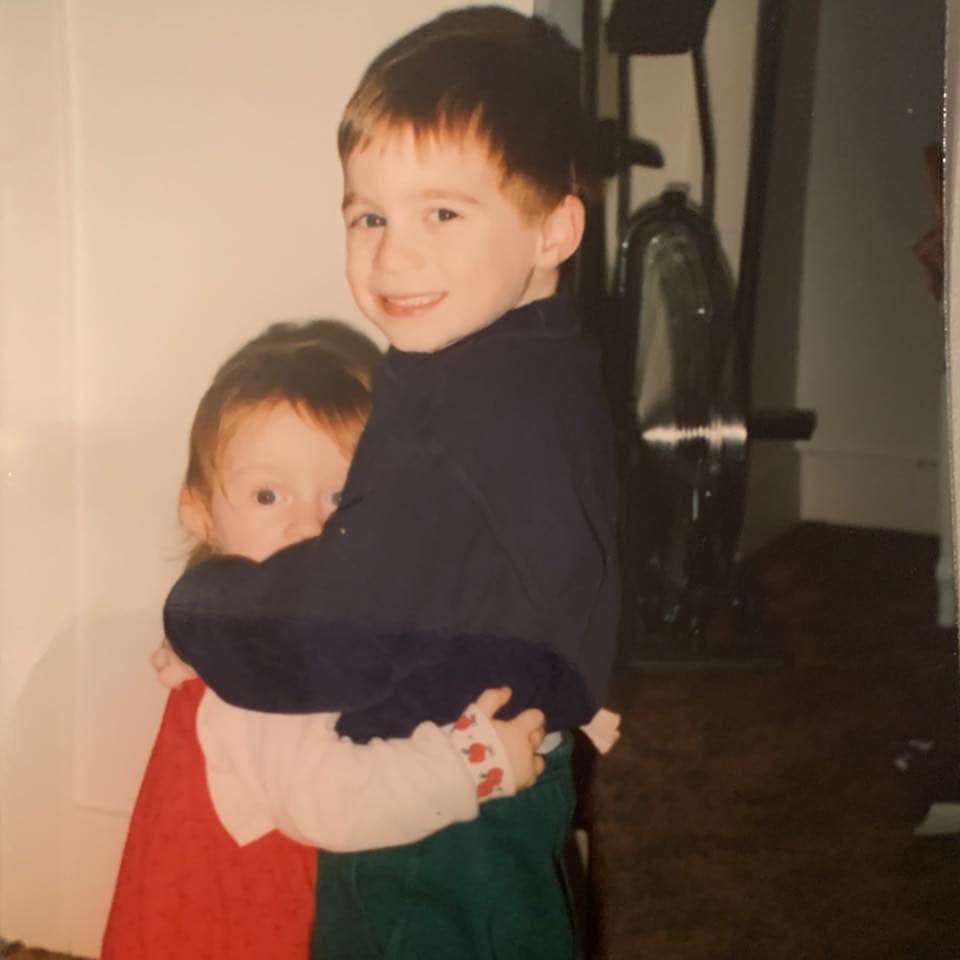
Four months after the post was published, my older brother Tom died by suicide. A year after the post was published, my grandfather passed away from leukemia, and a few months after that, my great aunt passed from dementia.

In the weeks and months following Tom’s passing, Krav was still a constant for me. My coaches and classmates supported and comforted me when it was clear it had taken all of me just to be there. Even in the intensity of class, in defending myself from attacks or sparring with my partner, it became difficult to clear my head. Perhaps the supporting structure of my “aggressive meditation” had weakened when my entire reality shifted. Losing my brother so early in life was something so unexpected. We train to expect the unexpected, but this was beyond my purview.

One evening, my training partner must have noticed my detachment and approached me after class. I told her about my brother.

“What’s your brother’s name?” she asked. “What was he like? What did he like to do?”

“Tom. He wanted to make movies. He wrote film scripts,” I said. “He had a dark sense of humor, but he also very kind.”

We talked a bit more, and got more into talking about writing. As it turned out, she actually studied English in college as I had, and wrote poetry. I told her to send me some of her poems sometime. We packed up our gear and before she left, she said:

“Thank you for sharing Tom with me today.”

It only required asking a few simple questions to turn my night around, to allow me to gift someone with my memories of Tom. I realized that my reality outside class didn’t have to fully disappear during training; in fact, I can’t just run away from my grief and sadness by training. I had to give myself the time to feel everything I was feeling in order to bring myself back to the moment and focus solely on learning my techniques.

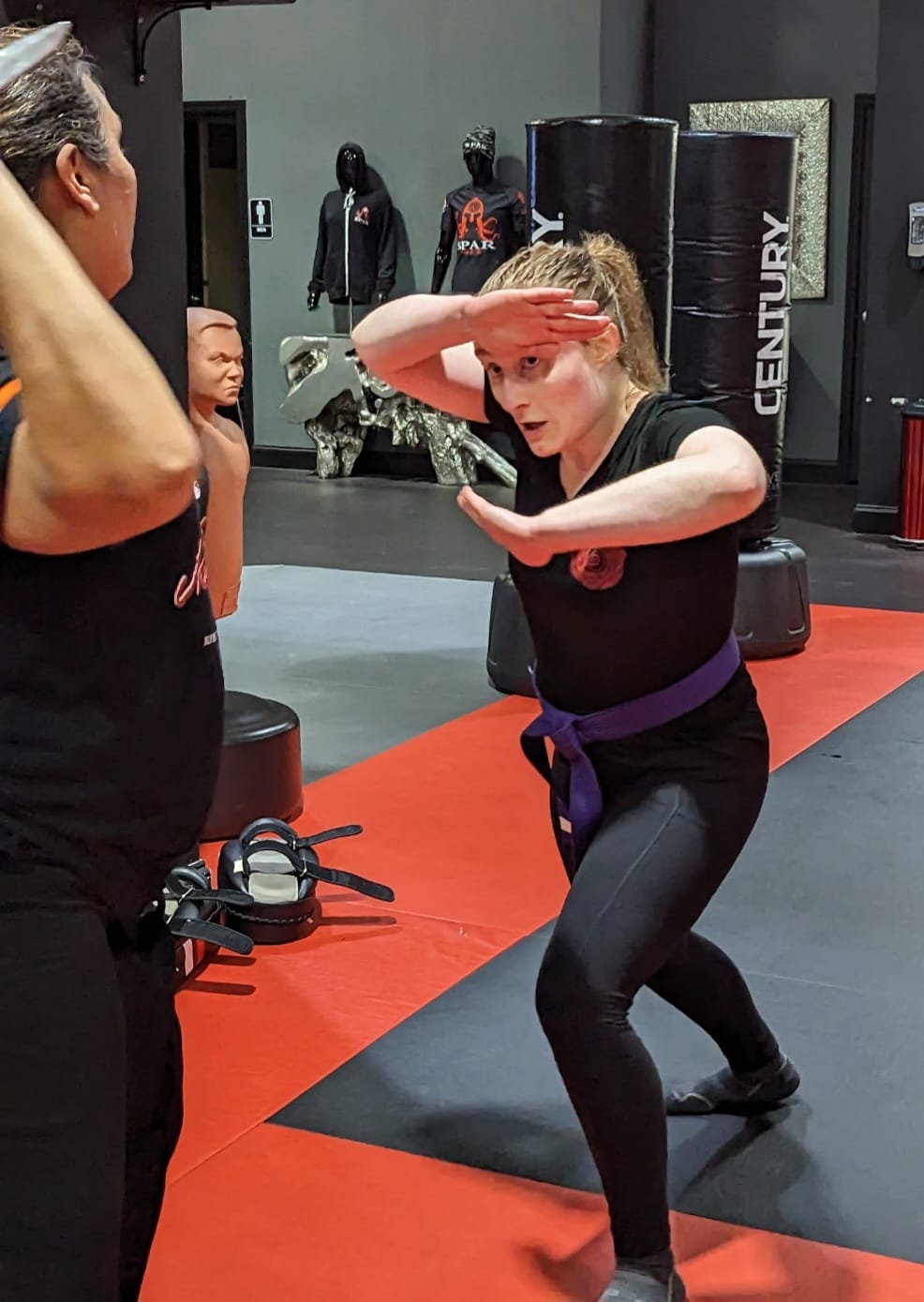
So, where does Krav stand in my mental health journey now? It’s a little complicated. Last September, I failed my purple belt midterm, which came as a complete shock to me. I’d never failed a midterm test (typically a class-length assessment of the techniques learned over the last three to six months). A few weeks later, after practicing the defenses I’d screwed up, I asked to be tested again. I failed, again.

Something about this failure in combination with my uncertainty in my career sent me in a downward spiral in a way Krav has never affected me before. I was feeling hopeless all the time, physically heavy, I knew I’d been here before. This time I knew what to do. I confided in my therapist, called my psychiatrist about changing my medication, and I kept going to Krav. I wasn’t going to get better by pouting and staying home.

A month or so later, my coach asked me once more to demo the techniques I’d previously messed up. I finally passed my midterm, and coach put my midterm stripe on my belt. Never was a little piece of tape so validating for me.

Photo credit: Spar Self Defense.

A few months after that, I tested for my brown belt. During the warm up, I genuinely thought I wasn’t going to make it. My legs wobbled, my head felt light, but my classmates wouldn’t let me give up. The test challenged my ability to improvise in scenarios when my learned defenses didn’t go as planned. After two hours, physically depleted beyond my limits, I got my brown belt.

I’ve heard there’s something uniquely Western about belts measuring our progress, that we need them to feel accomplished. I think that’s true for me, at least. By celebrating the smaller achievements along the way, you give yourself another boost to move forward. My mental health and Krav journeys can both feel like I’m taking a step forward only to take a couple steps back, but progress is rarely linear. I’m still fighting, but I understand more now than I did before that I’m not alone. That’s all I have to share for now.

Sign up here to be notified of my weekly posts, offers, and promotions.

Featured Photo Credit: Julia Larson

Feeling Stuck in Your Writing Life? Here’s How I Got Myself Out

For the last few months, I have been in somewhat of a writing slump when it comes to my memoir. We’ve all been there. I think many of us spend more time in the slump than not, unfortunately. We make excuses, like needing to catch up on chores, needing exercise, or just being too burned out from our full-time jobs. Most days, by the time I can even sit down and write, I tell myself I don’t have the mental energy and boot up a video game.

            We can come up with plenty of good reasons not to write, the one we cling to the most being “writer’s block.” For a long time, I believed writer’s block was real because I only felt naturally inspired maybe two percent of the time. I thought to be a good writer was to write from that headspace you inhabit only two percent of your everyday life. That was where the magic happened.

            If all writers lived that way, we’d have nothing to read. When I was in college, any time a famous writer would visit campus and be asked “what advice do you have for new writers?” they would always say “just keep writing.” It would grind my gears. What did they think we were doing?

            But as my writing habits have evolved over time, this sage advice carries a lot more meaning. During lockdown in 2020, I decided to start writing for just thirty minutes per day. Pre-pandemic, I was writing maybe thirty minutes per month, if that. My logic was, it’s more than I was doing before. Since I had nowhere to go, I had to get myself in front of Microsoft Word every single day, regardless if I was in my two percent window of inspiration or not. Even if I only wrote a couple of sentences, I sat in front of the computer for thirty minutes, getting my mind programmed to write. It dramatically changed my writing life.

            So, maybe you don’t have thirty minutes every single day. Maybe getting up a half hour earlier every day churns your stomach. What about thirty minutes per week? Five minutes per day? Going from no writing habit to a writing habit regardless of how you structure it is a step in the right direction. You may even find yourself going over your time limit some days.

            But, as I said at the start, I did get stuck again. Over these last couple of years with everything being open again, my life became packed with obligations, hobbies, and social activities (all things we desperately needed after lockdown). For a long period of time, I managed to get some writing done on a weekly basis in order to get feedback in my writers’ workshop (another way to hold yourself accountable). Over the last few months of some personal turmoil, burnout, and overall busyness, I just fell out of practice.

            As a memoir writer, you’re not coming up with new material, so you’re pretty much just mining your own memories. It’s only a matter of what is relevant to the larger narrative you’re trying to tell for the specific book you’re writing; what will move the protagonist (you) forward on her journey? I’m at a point in the process where I’ve written out the most vivid, obvious points in the story and now have to dig back to the moments in my life that led up to the main events of the book. After such a long period of not writing, I was coming up empty so, while this might seem cheap or just completely obvious, I looked up writing prompts.

            Writing prompts can be helpful or frustrating. Ones like “write a story about a parachute without saying the word ‘parachute’” don’t get my juices flowing. However, “what’s your worst fear?” brought me back immediately to swim lessons as a child: me, sitting at the edge of the pool, pulling my knees to my chest, shaking my head back and forth as the swimming instructor pleads with me to get in the water. This reminds me of how I fell into a wading pool as a toddler and became terrified of water, or how long it took me to learn how to swim as a young adult, or when my brother would push me underwater in the pool. All of that from “what’s your worst fear?”

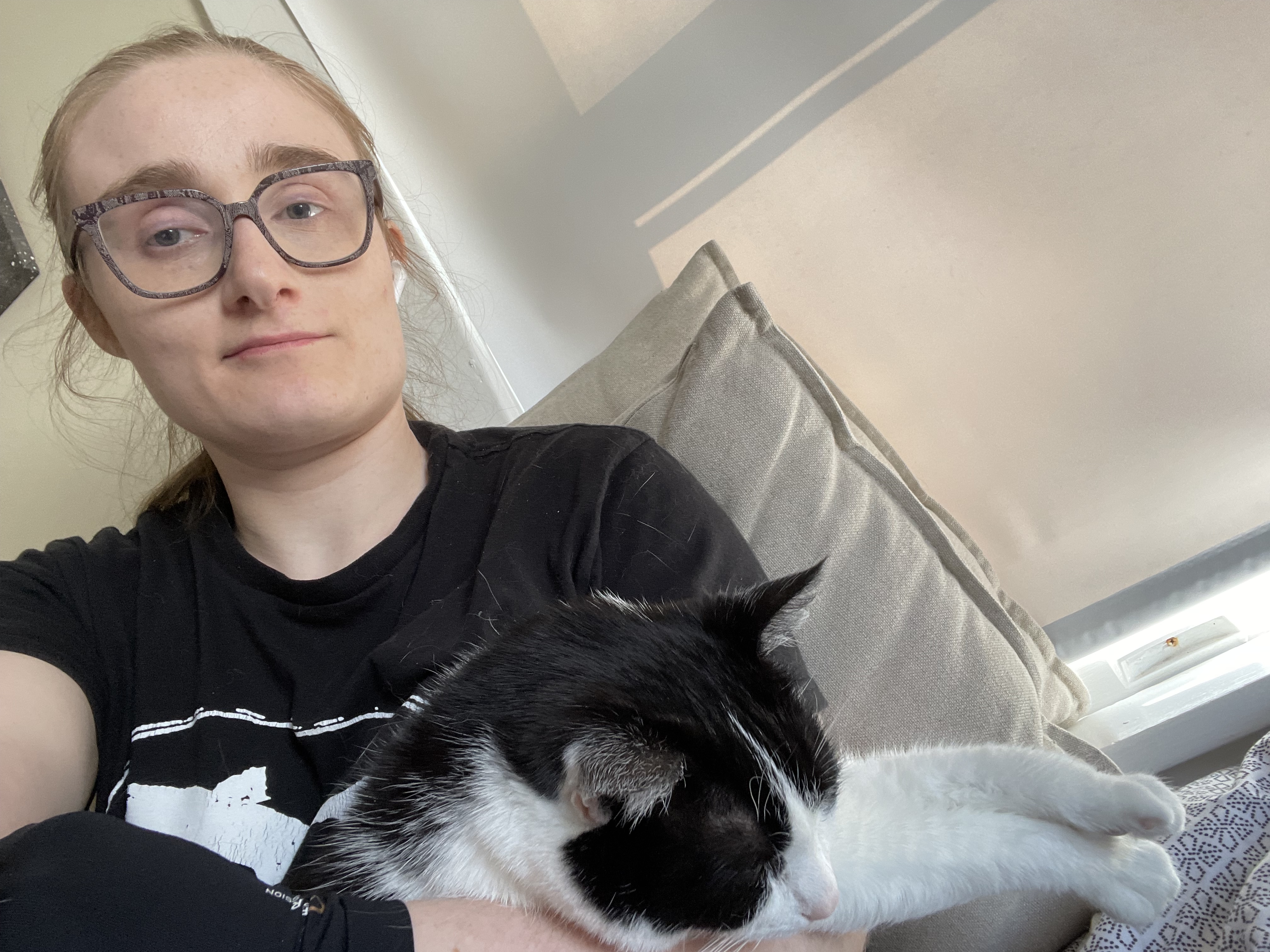
            Bottom line: you have to get yourself in front of the computer (or notebook, or speech to text tool, etc.) and start. Even if you write pages of garbage, that’s still pages you wouldn’t have had if you hadn’t sat down and committed to the work. The #AmWriting Podcast’s slogan is “Keep your butt in the chair and your head in the game!” which sums it up quite nicely. Disconnect your computer from the internet if you have to or try a productivity app. Of course, so many of us have cognitive differences that make it difficult to focus and write, and in a later post I would like to dive into the resources and communities available for those of us who need them. Whatever it takes to get you in that chair. And if all else fails, get yourself a lap cat like mine to keep you from getting up!

Featured photo of woman holding blank paper by cottonbro studio.

My Book Coaching Mission

It’s more than overdue that I discuss not only why book coaches are important or why you should hire a book coach, but also why I decided to become a book coach. I discussed a bit how I stumbled on the book coaching profession in an earlier post, but it was mostly a stroke of luck just hearing an advertisement for Author Accelerator on a writing podcast.

It may be obvious that I, like many people, have been a bit lost career-wise for the last few years. I have been struggling for some direction since getting laid off from my publishing job back in 2019, and obviously the pandemic didn’t help. When I heard about book coaching on the #AmWriting podcast a couple years ago, it felt like I’d finally found my calling. As I discussed in my post defining book coaching, I feel that book coaching is the ideal way to bring my editorial and creative capabilities together.

In my time in publishing, it was humbling and exciting to watch authors see their books go from a Word Document to printed book. As a book coach I can start at an even earlier stage of the process: helping a writer develop their idea into a structure that ultimately leads to a book. At the risk of sounding corny, coaching can take a writer’s daydream and help make it a reality. That is exhilarating to me. But what kind of writers would I work with?

The answer to this question became clear to me during a session of the weekly HerStory Writers’ Workshop I mentioned in a previous post. Every week in workshop, we hear from so many people harmed by the mental health system and mental illness who want the world to know their stories but feel silenced by society. We, in the United States at least, like to talk a big talk about mental health awareness and improving how we care for the mentally ill and/or those falsely labeled, but we don’t stop and listen to the people who have really been through it. Most of the people in workshop do not otherwise safe place to discuss their psychiatric trauma, and I firmly believe this needs to change.

How do we make more safe places for people to discuss their psychiatric trauma and/or their mental illness? Raise awareness! How do we do that? Publish the books of those who have been harmed, consequently amplifying their voices. My mission as a book coach is to help writers impacted by mental illness/the mental health system by helping them finish their books and get their books published for a large audience. By publishing these narratives and showing the greater public that these stories are important, we will get the realities of mental health in the mainstream.

My (albeit idealistic) hope is that through this mission we can fight stigmas and psychiatric labels associated with mental illness as well as build community and connection through these personal narratives. The more that those who have also been victimized can access these stories and know that they’re not alone, the more we can come together to influence change.

Writing and publishing a book is an arduous process for anyone, but it can be even more difficult for someone battling a mental illness or trying to cope from past trauma. Personally, my depression more than my anxiety is what bogs me down. My depression tries to tell me that I’m never going to get anything finished, and whatever I do write is going to be worthless anyway. My goal is to make the writing and publishing process easier while also keep the writer on track to meet their writing and publishing goals.

What are you biggest challenges in trying to write a book if you’re struggling with mental illness and/or trauma? How can a coach better serve you as a psychiatric survivor, someone who was misdiagnosed, or someone who is suffering from a mental illness? Feel free to respond in the comments or inbox me if you would prefer to respond privately.

Sign up to my weekly emails to be notified of my posts, promotions, and offers.

Featured photo by Polina Kovaleva.

Why Isn’t My Book Selling? What You Need to Know about Building a Marketing Plan

One of the most frequent frustrations I’ve seen from authors in my work in publishing is the lack of returns in sales after years of painstaking research, tedious editing, and soulful writing. It’s so hard to know if our hard work will pay off (and to be honest, your agent and your publisher don’t know for certain either).

However, what I have noticed is the disconnect between authors and publishers when it comes to the marketing process. In many of these instances of low sales, the authors are shocked at how little the publisher has done to publicize their book. The truth is: publishers do not have the staff to continue to market your book post-launch. The publisher almost always picks up your book based on how well they believe you will sell it. On the rare occasion that the publisher spends the time and financial resources marketing your book long-term, it’s because they know it will be worth their while in sales.

But there are millions of books out there. We can’t count on our book being “The One” that the publisher banks on. So, how do you market your book to make sure it actually sells? You need to start with a strong marketing plan, which should be present in your book proposal.

Most agents and editors when reviewing book proposals are looking for writers with a platform. What’s a platform? It is an established, dedicated following of potential readers that you’ve built up over time either over social media, events, email marketing, community building, or your own writing (or other content creation). A platform is your built-in group of readers who already trust and value your work and are therefore first in line to purchase your book.

If you have a platform, you have a lot of options. You can run giveaways and promotions that will mobilize your followers to publicize your book. You can put out little snippets of the book (with your publisher’s permission) as little teasers to get people interested. If you have not been doing so already, create consistent content to keep your followers engaged and bring in new ones. Start discussions with your followers on social media about what their pain points are, what the latest trends are, and learn what goes in to their decision to purchase a book.

Don’t have a platform? Don’t panic just yet, but know that a platform is something you build up over years by marketing yourself and your expertise. If you’re ready to pitch your book and you don’t have a platform, you can’t materialize one overnight. In order to sell your book without an established platform, you need to compensate with a stellar marketing plan.

Begin with your ideal reader, and scope it out from there. Where does your ideal reader spend most of their time? Where do you imagine your ideal reader in the world with your book? What problem is your reader experiencing that your book will solve, and where will they end up after reading it? What kinds of activities would they be doing or media would they be consuming where they could discover your book?

Break your plan down by the different types of media where readers might find your book: podcasts, television, radio, print media, websites, social media. Which social media pages does your reader follow? Which publications, podcasts, or television programs could you be interviewed on to talk about your book? Are there influencers in your subject area who you could try to contact about plugging your book? Are there events, conferences, or conventions where you could speak publicly about your book? Are there particular communities/organizations that would benefit from having copies of your book?

If you’re thinking, “I barely know what an ‘influencer’ is,” or “speaking in front of people gives me major anxiety,” it’s okay. You will need to show the agent/editor that you have brainstormed the best options for marketing your book, but don’t include something in there that you know you’ll never be able or willing to do.

So, say you do all of these things I’ve suggested and…crickets. The book publishing industry is incredibly unpredictable. Your publication date could coincide with a sudden, tragic historical (or worse, financial) event. A paper shortage could delay the right number of copies getting to retail stores, and by the time they do, everyone’s moved on to the next major book.

My point is, there is so much we cannot control. Sometimes we just don’t know why a particular book did not connect with readers when we thought it would. The most important thing is to make sure we’ve made every effort on our end to get our book in our readers’ hands.

Your marketing plan is a huge part of your proposal, which is something I can help out with as a book coach. Inbox me if you’re interested in getting some direction on this.

Subscribe to my (weekly) newsletter to be notified of my latest posts, offers, and promotions.

Featured photo by cottonbro studio.

Writing on Grief: What I Have Learned

Over the last two to three years, I have been working on a book-length memoir encompassing a tragic series of events in my life, beginning with the loss of my brother to suicide. I understand that this is not the sort of topic every reader has the emotional capacity to handle. Many readers read to escape the horrors of real life. I hope to reach the readers who cannot or will not escape it and instead yearn to connect with others who have had similar experiences.

I’ve crafted and nurtured my memoir through a HerStory Writers Workshop that seeks to produce works that re-imagine the mental healthcare system. This has allowed me to not only get feedback on my work, but read it aloud to a safe, patient, and supportive community of writers with similar experiences. If you plan to publish any work on a difficult subject matter, particularly grief, having the opportunity to read it out loud on a regular basis makes you accustomed to discussing the material with others. This is important if you would like to sell your book and connect with other people who share your pain. If it is too difficult to read aloud and discuss, it might not be time to publish just yet.

You also have to be ready to expect the unexpected. I found particular memories that were horrific in the moment to be easier to write in retrospect, whereas other memories more challenging to write because they were more traumatic in retrospect. In other words, some memories were more tragic to recall than they were to live. Essentially, don’t think you will always know what will be the most emotionally difficult to write.

Also, don’t be afraid to use humor (when appropriate). Some of my funniest memories were in my darkest times. I believe the contrast helps lighten the emotional weight off of your reader while accurately depicting the complexities of life. Of course, if there is not any humor to be found in a memory, don’t force it. But do not feel guilty for finding something to smile about, either. Writing the ins and outs of our trauma does not need to be sterilized for the reader to grasp your pain.

A general principle I abide by for memoir but especially when writing about a lost loved one is to always get your story on paper first. Write down everything you know without influence of another family member, friend, or acquaintance. Your memoir is first and foremost your recollection of events. I have found in my writing that everyone has a different impression of my brother, and some people’s memories of him as a person can be drastically different from one another. But this isn’t their book, it’s mine. After recording my memories, I have gone back and asked some select people I trust to fill in blanks where it may be relevant to the narrative, but I’m not in any way deceptively twisting the narrative or pulling it away from my truth.

Most importantly of all, though, when writing about grief you need to be kind to yourself. Listen to what your body tells you. If writing a few sentences makes your body feel drained, fatigued, or out of sorts, you might be pushing yourself too far. Writing about grief can be a cathartic process for many writers, but it can also retraumatize us. Writing should not be burning you out emotionally, physically, or psychologically. Don’t get me wrong, writing is work; it shouldn’t feel easy, but your health should always come first. If necessary, seek aid from a mental health professional you trust to help lighten the emotional weight. Make sure to have at least one beta reader or coach outside your immediate circle (who preferably does not know the people involved in your memoir) to review your pages in segments as you write them.

I am interested in being this person for you if you are thinking about writing a book involving grief or issues with mental health (as a writing/publishing professional, not a mental health professional). Please reach out if you’d like to talk to me about your project and if you are comfortable, share your own experiences/tips in the comments.

To be notified every time I publish a blog post, please subscribe to my weekly newsletter.

Featured photo from Etu family.

How to Publish? The Three Primary Methods of Publication

It’s the end goal for many of us writers: our book in print, our goofy little photo/bio at the back of the book, a spot on the shelf at Barnes & Noble…maybe even a book signing (where people actually show up)? Or, even, a spot on the New York Times bestseller list? Could you even imagine?

Let’s back up for a second. I don’t know about you, but I was raised as a fledgling writer to believe that traditional publishing was the only way to go, the end all be all for successful authors (or just authors, period). But we know that publishing has become more complicated than that, and every writer has their own individual goals for their writing and their books. There are a variety of ways to get published these days and it’s worth examining your goals before investing in one method over another.

First of all, think about why you’re writing your book. Are you writing for yourself (perhaps a memoir processing years of trauma); a particular audience (maybe you know you have insights that could help single parents experiencing burnout); to make money (you’re an optimist); or to convey a social message (ie. you created a reference guide for daily ways to combat climate change)? Your goals for yourself, your book, and its impact should all guide your publication decision.

Let’s break down the three primary ways to publish: traditional (big publishing house), self-publishing, and hybrid publishing.

Traditional publishing almost always involves first seeking a literary agent to represent your work, which in itself can be a challenging and humbling process. Agents have their own set of interests in terms of genre and the experience level of the authors they would like to work with, and it will take time and research to find the right agent for your project. In order to pitch your book to agents, you will need to create a book proposal in which you present yourself, your book, and how you plan to market your book (a book coach can walk you through this process!). And be prepared for those heart-crushing rejection letters I discussed several weeks back.

So, why would you put all of this time and energy into traditional publishing over self-publishing or hybrid publishing? Getting your book traditionally published provides you with wider distribution: your book makes it to the shelf of Barnes & Noble because your publisher can sell it to the bigger booksellers. Your book is more likely to be reviewed by popular media (think New York Times, Kirkus, Publisher’s Weekly) because your publisher can get it in the hands of reviewers. You are more likely to become a New York Times-bestselling author from traditional publishing largely due to the distribution, exposure, and positioning of your book. And don’t forget about that juicy advance check.

Being traditionally published is, well, a big accomplishment. In the eyes of many in the literary community, it is the only respectable way to publish. It’s a sign that you’ve “made it.” What are the downsides? You have little say in the cover design process, but unless you’re a talented graphic designer and marketer, it’s best to let the experts do their work. The publisher decides how the book should be positioned in the market, how it’s presented to media/reviewers, and where it is sold. The advantage is, as I mentioned above, a traditionally published book will be sold widely. The disadvantage is that you are making royalties, so contractually the publisher and your agent are also making something off of the profits of your book. The hope, of course, is that you sell so many copies that you’re satisfied with whatever you personally end up making.

The reasons to self-publish are, conversely, the reasons why you would not wish to traditionally publish. Self-publishing involves utilizing a company or platform such as Amazon Kindle Direct, Apple Books, etc. If you want to print your book, you would directly pay for printing costs. You’d also be designing the cover, choosing your font and typesetting, and taking care of all copyediting/proofreading yourself. E-Book publishers such as Amazon Kindle Direct can be cheaper or even free, but you would only be publishing your book online.

Deciding to self-publish entirely depends on where you would like to see your book in the world and how much control you would like to have over the creative process. If it’s more important that your book be accessible to as many readers as possible, publishing an e-book online is an excellent choice. Self-publishing also gives you a larger portion/closer control of your profits. The only disadvantage to this is, of course, that it is incredibly difficult to get self-published books on the shelves of popular bookstores. Self-published books can and have been bestsellers, but they do not have the distribution that traditionally published books have.

I’m still learning the little details on the differences between self-publishing and hybrid publishing, but hybrid publishing is like self-publishing in that you own your book exclusively and are in control of the distribution and profits. However, a hybrid publisher takes out the legwork of typesetting, cover design, font choices, etc. In a compassionate post on hybrid publishing, Barbara Lynn Probst describes it like hiring a contractor to produce your book (for a fee) without owning it.

The advantage to hybrid publishing would be you would have more control over the process and the profits, like self-publishing, but you would pay professionals to do the work to make your book look its best, rather than trying to do so yourself. The disadvantage, similar to self-publishing, may be in the distribution, exposure to the market, reviewers, etc.

I hope this gave you a better idea of your options when deciding how to publish your book. One thing I really didn’t touch on a whole lot is marketing; first because the practice is largely the same for all three primary publishing methods and second because I would like to dive deeper into this topic in a later post. No matter how you publish your book—especially if you traditionally publish—YOU are the number one salesperson for your book, not your publisher, your agent, or your publicist. The success and sales of your book entirely depend on how well you are able to get the word out, through your platform, personal network, interviews, events, etc. Changes in the industry have put the onus on the writer to do this work. Luckily, a book coach can help fill in these gaps!

Image by chitsu san from Pixabay.

What Is the Difference between a Book Coach and an Editor?

One of the most common questions book coaches get asked is: how is a book coach different from an editor? As I discussed in a previous post, it’s understandable without prior knowledge to think “book coach” is just a fun name for “editor,” but it’s actually more complex than that.

For starters, we should review what an editor does, and the types of editors that exist. On the basic level, a copyeditor works only on grammar, spelling, and punctuation. You would typically hire a copyeditor when your book, essay, etc. is in the later stages and only needs minor details checked. You don’t want to hire a copyeditor too early, when so much of the text is likely to change. A line editor, while often lumped into the same job description as a copyeditor, is different in that they focus more on the style and sentence structure rather than specifics in grammar/punctuation. Reedsy provides a good comparison of these two roles.

There’s also proofreading. People outside of the editing and publishing world tend to think proofreading and copyediting are one and the same, but they’re not. Proofreading’s purpose is in the name: proof. At this stage, you’re looking at the literal page proofs for any technical goofs, ugliness, or last-minute typos that somehow made it this far into the printing process (it happens, we’re human). If you were on the traditional publishing route with your book, you wouldn’t typically hire a proofreader as it would be taken care of on the publisher’s end. If you’re self-publishing and overseeing the entire technical and design processes, hiring a proofreader could be enormously helpful in making your book look as professional as possible.

Developmental editors do the work that is most frequently compared to what book coaches do. Developmental editors take a broader look at your book, making sure your argument is supported, your narrative is fully developed, and your structure is sound. This is the kind of editor you would hire early on in the writing process when your first draft is complete. When I was working in publishing, this was the kind of broader editing the acquiring editor would do. (I imagine in larger publishing houses, this is not the case. But in smaller companies, editors wear many hats.) Literary agents can sometimes request developmental edits as well, if they believe your book would be better marketed with some tweaks to the overall structure.

So, if you read my post about what book coaches do, you know there is some of that developmental work involved for sure. When working through, for example, an accountability coaching package in which the writer sends a few chapters per month/week/etc., the book coach would provide the writer with ongoing feedback on the larger narrative structure of the book and what the writer should be revising on a broader scale. However, a book coach’s work with a writer can start much earlier in the writing process.

Say you want to write a book, but you have five different ideas. You’re not sure if they could all function in the same book, a few books, or five different books. Your book coach can start with you at the idea stage, working you through a set of exercises to help you organize your thoughts and decide exactly what you would like to accomplish. Your coach can then guide you through the process of structuring your book chapter by chapter in a way that’s designed to keep you from getting stuck along the way.

To sum things up, the key differences between a book coach and an editor are these: editors largely work on a more polished (at least, structurally) version of your book while book coaches guide you from the early stages. An editor is looking at all of the ways to improve the text (either on a micro or macro level, depending on the type of editor). A book coach will help you hone your craft more generally as a writer, offering resources, advise, and insights along the way. You will want to work with an editor to discuss technical, concrete solutions for the text whereas a book coach is holding your feet to the fire to get the initial work done.

Book coaches are also unique in that they help writers develop book proposals and pitch plans, which editors can certainly help with, but they are mostly just concerned with text-related issues. Book coaches are expected to keep up with the market and know what a writer should be doing to promote their book.

One more thing to keep in mind as well is that pricing may vary with hiring an editor vs a book coach. Editors can charge by the word/page/hour while book coaches often price by package, because the amount of work isn’t merely dependent on the length of the book. Editors may have pricing packages as well, but it depends on who you hire.

You can clearly see that neither job is more important than the other, since they serve very different purposes. What’s critical is that you understand which professional you need to hire at which stage of your writing/publication process. The best of us don’t do this work without help.

If you’re curious, Author Accelerator has a helpful blog post that breaks down specifically the differences between a book coach and a developmental editor.

As always, if you’d like to learn more about book coaching, please reach out for a free thirty-minute discovery call!

Featured photo by Suzy Hazelwood.

Rejection Letters: My Lessons from Editorial Assistant to Book Coach

We’ve all seen it. The form letter: the polite, generic language letting us know that our piece, book, essay, or whatever just “is not a good fit” or “not what we’re looking for right now.” Best of luck, best wishes, etc. Writers get used to the sting of rejection when they’re brave enough to get their work out there. And they are, you are brave for gathering the courage to do it! But of course, rejection still sucks. You can sit at a desk pounding on a keyboard for years, keeping your Soul on the Page all to yourself and finally start to believe, just maybe, someone will want to publish this for it all to add up to what feels like, well, nothing. This is the far more common occurrence.

When I started my first “real job” in book publishing as an editorial assistant in 2016, I came in to an office full of rejection letters that needed to be sent out. The stack of papers was over a foot tall with submissions and corresponding form instructions for each. The previous EA had fallen behind on everything, and rejections fell to the bottom of the priority list, so they must have kept piling up.

As I caught up on getting the letters sent out, I tried to emotionally distance myself from the hopeful writers who’d allowed themselves to be vulnerable enough to submit their work. We had four or five standard form letters, but most of the time used one template. We responded in whatever method possible: if the writer did not provide an email address, we sent them snail mail. Once, a gentleman showed up to the office in person wanting to speak to someone about their book, and the introverts of editorial scattered like birds from a shaken tree.

I received several cold calls over the years, one from a teacher who wanted to know how she could get her students’ poetry published. Even after I told her we did not publish poetry books, she still read a sample or two to see if it piqued my interest. A self-published science fiction author once sent five or six printed volumes of their series, even though we were a nonfiction publisher. The books sat in my office for months before I found the time to ship them back.

Another time, an elderly gentleman emailed me every day to see if his proposal had been viewed yet. He finally emailed me on his eightieth birthday to let me know what day it was, essentially implying he did not know how much longer he would be around. We got him his rejection letter.

The previous anecdote is a good example of why a rejection is still better than no reply at all, but it doesn’t hurt any less. The responses writers get are rarely thorough enough for us to understand why our work was not accepted, and we’re left to play guessing games with our own insecurities and self-doubt as to why it shouldn’t be published. In my years working in editorial, I had a few letters here and there to transcribe in which our editor-in-chief would provide detailed advice as to how the writer should pitch their book elsewhere. But knowing how many submissions every publishing company and agent receive in any given week, it’s no wonder ninety percent of us just get form letter.

As I made my way through the coursework of my book coaching program, I learned about crafting a book with a solid, clear purpose and structure as well as developing a strong proposal that will show agents and publishers that you know exactly what you’re doing. Unfortunately, it’s not all about how passionately we love to write or how beautifully we may do it. There are so many other elements and efforts involved in publishing a book. A book coach can help you with every stage of that process. We can take a look at a rejected manuscript sample and assess the reasons why it was rejected, help you perfect your book proposal, and create a multi-step pitch plan.

I have learned that there are some very simple, specific reasons why an agent or publisher will reject your work. To learn more, go get my FREE guide to the Top Ten Reasons Your Book Proposal Keeps Getting Rejected.

What Is a Book Coach? (And Why You Might Need One)

When I first heard of book coaching, my first thought admittedly was, “this sounds like a fake job.” The concept of coaches outside of sports has always been a bit of a mocked profession (life coach, I’m talking about you). What does a life coach do that a trained therapist cannot? What does a book coach do that an editor cannot? A coach, by definition, is “one who instructs or trains.” Do editors or therapists do that? Honestly, though, life is hard. Writing a book is hard. Who wouldn’t want somebody to instruct (or train) them through either of those processes?

I discovered book coaching when I heard an ad for the Author Accelerator Book Coach Certification Program on the #AmWriting podcast. Author Accelerator trains and certifies book coaches and helps their coaches learn how to build their business. They also match authors with compatible coaches. When I discovered them, I had been out of the publishing world for a couple of years at that point, and was looking for anything to get me back to writing, editing, and books. Again, book coaching sounded like a dream job, totally unreal. Help writers with their books all day, make my own schedule, and most students end up hired by their practice clients before they are even certified? No way. This must be a scam, I thought.

After weeks of Googling, scanning TrustPilot, and various other business and publishing sites, I determined that no, this was not, in fact, a scam. Author Accelerator, according to my amateur research, was a legitimate and highly regarded business. I was invested. I signed up for the emails, watched the free video series, bought the books, and eventually signed up for the rigorous nonfiction certification course.

As I worked through the self-study portion of the program, I felt more and more like this was a job made for me. In my previous editorial work, I was a jack of all trades, master of none: I edited, did office work, proofread, babysat authors; I essentially witnessed every stage of the publication process. However, when the company closed and I applied to full-time editing positions, I had no concrete editing samples to use in my applications. I could flip open a book and point out every little detail I worked on, but I couldn’t actually say “I edited this book.”

Book coaching is the perfect middle ground for my level of expertise: it’s project management, author cheerleading, developmental editing, publication/pitch guidance, and more. I already had the experience in author cheerleading: encouraging authors over long phone calls to meet their editing deadlines before worrying about book awards, to not feel discouraged when their book sales were low, and assuring them that yes, their book, their message is important. My editing fundamentals were strong enough to do the work of a book coach, as a book coach is more bigger picture stuff, less line editing.

Looking back, I can see now that the authors I worked with in my time in publishing could really have used their own book coaches. A book coach can help the writer through any stage of the book writing process, whether it’s developing a main idea and narrative structure from scratch, evaluating a manuscript that’s been rejected over twenty-five times, helping a writer develop their book proposal and pitch strategy, or even just keeping the writer accountable throughout the book writing process. Having someone to keep you on track is invaluable.

So why might you need a book coach? There could be plenty of reasons. Perhaps you’re an expert on something or have a great story to tell but have never written anything since college, and you need someone to guide you as to how to actually structure a book. Maybe you’ve written a book but you don’t know how or where to publish it, or you’ve submitted that book to your top ten agents and gotten standard rejections every time. Or, you’re a busy parent working a full-time job but you have a book just itching to come out and you need someone to keep you on track and tell you if any of your sleep-deprived sentences are making any sense. All these reasons and more are why you may need a book coach.

Do you have an idea for a book and would like to chat about it? Feel free to send me a message. For more information about book coaches, check out Author Accelerator.

Featured Image by Sumit Mathur.